Pemulwuy
The Rainbow Warrior

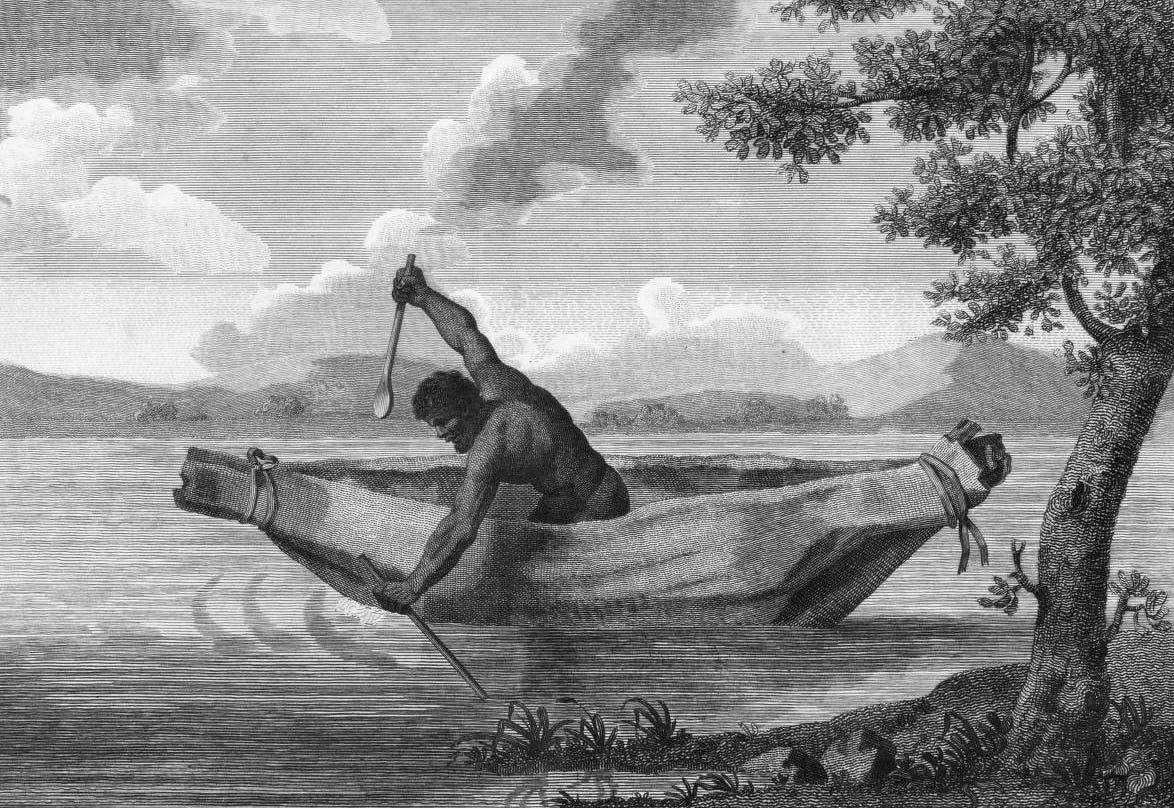
Pemulwuy was killed on this day in 1802. History books often paint the early years of British settlement in Sydney as a story of lopsided survival against a harsh landscape. But there is another, far more dramatic history written into the sandstone and bushland of the Sydney Basin. A history of a fierce, decade-long guerrilla war led by one of the most formidable resistance figures in Australian history: Pemulwuy.
A Bidjigal man of the Eora Nation, Pemulwuy (whose name translates to earth or clay) was not just a warrior; he was a cleverman, a political strategist, and the face of Indigenous resistance against the British Crown from 1790 until his death in 1802. Much rather a life-size bronze of this guy rather than Clutzo Morrison.
The Spark of Resistance
Born around 1750, Pemulwuy was a mature man when the First Fleet arrived in 1788. He was identifiable by a distinct physical trait, a turned-in left foot, but it was his fierce determination to protect his people’s law and land that truly set him apart.
As the colony expanded inward toward Parramatta, clearing native vegetation and driving away the game that local clans relied on, tensions reached a boiling point. The spark that ignited Pemulwuy’s public war occurred in December 1790.
John McIntyre, Governor Arthur Phillip’s official gamekeeper, was a man widely loathed by the Eora for his cruelty and blatant disregard for Indigenous law. Pemulwuy tracked McIntyre near Botany Bay and fatally speared him. Governor Phillip, furious at the defiance, ordered a retaliatory expedition with strict instructions to bring back the heads of ten Aboriginal men. The expedition failed to capture anyone, but the battle lines had been definitively drawn.
The Guerrilla King of the Hawkesbury and Georges Rivers
Recognising that the British possessed superior, long-range firepower with their muskets, Pemulwuy chose not to engage in traditional, open-field warfare. Instead, he pioneered a highly effective campaign of guerrilla tactics.
Between 1792 and 1797, Pemulwuy organised and led a coalition of warriors from various clans, including the Bediagal, Darug, and Tharawal. They launched calculated, lightning-fast raids on British settlements stretching from the Georges River to the Hawkesbury. They burnt crops, drove off livestock, and targeted isolated outposts. For the fledgling, starving colony, Pemulwuy’s raiders were a catastrophic economic and psychological threat.
The Battle of Parramatta and the Legend of Invincibility
By 1797, Pemulwuy’s campaign reached its zenith. In March of that year, he led a force of roughly 100 warriors directly into the township of Parramatta, tracking a British punitive expedition.
The resulting Battle of Parramatta was bloody. Pemulwuy was confronted by government troops and armed settlers. In the brutal skirmish, he was shot multiple times in the head and body. Left for dead, he was taken to the local hospital and chained to a bed.
What happened next passed into legend. Despite horrific injuries, Pemulwuy managed to escape the hospital, leg irons and all, and slipped back into the bush. This miraculous survival convinced both his followers and many terrified settlers that Pemulwuy possessed supernatural powers—that he was a cleverman who could not be killed by British bullets.
The Bounty and Betrayal
By 1801, the colonial administration had run out of patience. The frontier was bleeding, and Pemulwuy remained a potent symbol of defiance. Governor Philip Gidley King issued a formal proclamation outlawing Pemulwuy, offering a massive reward for his capture or death: 20 gallons of spirits or a free pardon for any convict who delivered him.
The end came on June 2, 1802. Pemulwuy was ambushed and shot dead, likely by a British sailor named Henry Hacking.
To prove to the Indigenous population that their legendary leader was indeed mortal, and to satisfy colonial curiosity, Governor King ordered Pemulwuy’s head to be severed. It was preserved in a jar of spirits and shipped to England to Sir Joseph Banks, the famed naturalist, alongside a letter from King that mixed relief with a note of begrudging respect:
“Although a terrible pest to the colony, he was a brave and independent character.”
An Enduring Legacy
For over two centuries, Pemulwuy’s skull remained lost in the archives of British institutions. While repatriation efforts continue to this day, his true legacy never left Australian soil.
Pemulwuy was not a tragic victim of colonisation; he was a patriot who fought a sovereign war for his people, his culture, and his country. Today, as Australia increasingly confronts the truth of its frontier wars, Pemulwuy stands tall as one of the nation’s earliest and greatest military leaders—a symbol of unbreakable resilience and the enduring spirit of the Eora Nation.
